Wednesday, May 25, 2022

Robot set considerations

What should be considered when choosing a robot set? 

  • How many robots can be built?  1, 3, many
  • What programming languages supported?
  • What sensors included?
It is important  that a robot kit is flexible: allowing many robot builds; a variety of sensors; and multiple programming languages. Flexibility in the robot set keeps it useful as students grow.
These are discussed more below.

Overview

Robotics come in various sizes and shapes, but use same basic components of motors and sensors. 

Example: 2 robot models with 2 sample robots built from different kits.

  • motorcycle:   small Micro:bit and bigger Lego Spike Prime
  • driving base:  Lego Mindstorms Inventor (~Spike home) and larger older brother Lego EV3
These robots can all be used to teach basic movements,  sensing and reacting to their environments, or they can challenged to perform specific tasks. Data can be gathered from sensors and motors for evaluation.  Building and programming is learned. But for students it's more exciting to see the robots do what they told it to.

Robot Set Builds - more is better

It is important a robot kit is flexible allowing many robot builds.  Having a few specific builds is limiting.

All 3 robots used here allow multiple builds.  Spike Prime and older EV3 sets are both Lego.  Micro:bit motorcycle is built using the ElectroFreaks Wonder Build Kit and uses BBC Micro:bit as its computer controller.  Mindstorms Inventor is a home version of Spike Prime.

It's good if the building parts are something familiar and able to be reused.  Even Wonder Build Kit uses Lego compatible building parts.  Beyond introduction to robotics collecting compatible extra parts is useful for building competition robots. EV3 is no longer sold by Lego, but is still allowed in robotic competitions. If a school adds Spike Primes to EV3s, the building parts are compatible.  

So far robot sets do not allow interchanging motors and sensors because they have connectors specific to the computer controller and specific micro-code support.  The recent Raspberry Pi Build Hat add-on that allows Lego Spike sensors and motors is an exception. This allows using Raspberry Pi with Lego motors and sensors to build robots and additionally use extras, like the Raspberry Pi camera (more in a future post). 

Programming

At a minimum, programming support for following popular education languages should be supported:

  • word blocks similar to puzzle piece Scratch language  
  • (micro)Python

Sensors

Robot programming is event oriented and reacts to sensors. 

Basic sensors that should be supported are: 

  • Distance sensor (usually ultrasound)
  • Color or Light Intensity Sensor
  • Touch or Crash sensor
  • Sensor for exact turns [recommended]
    • Gyro sensor OR
    • Built-in Accelerometer often with motion sensing (tilting, falling)
  • additional sensors can be useful
    • Temperature, Sound Level, Humidity and Moisture sensors are common.
A display or LED matrix and sound output are also useful. 

Robots are fun for children and do not have to be specific to just one age or grade-level. 

Sunday, February 13, 2022

Projects worth sharing

This blog is really an e-portfolio of descriptions and links to better (project) work.
Also interesting Robotic workshops and contests are included.
Summaries of important ideas learned and useful tools are also noted.  

(date updated periodically, so this post comes first)

Saturday, November 13, 2021

Lego Construction Challenge, plus Robots

Here is the small Lower Austrian town of Niederkreuzstetten was a building challenge for children. To help attract more, the RTL Lego Master 2021 bring some of his large Lego builds.  Children were also encouraged to bring their favorite Lego constructions, both original builds and sets. There was a live Lego construction competition in 2 age groups. 

Robotix4Me also had 3 areas with robots to snooper: 

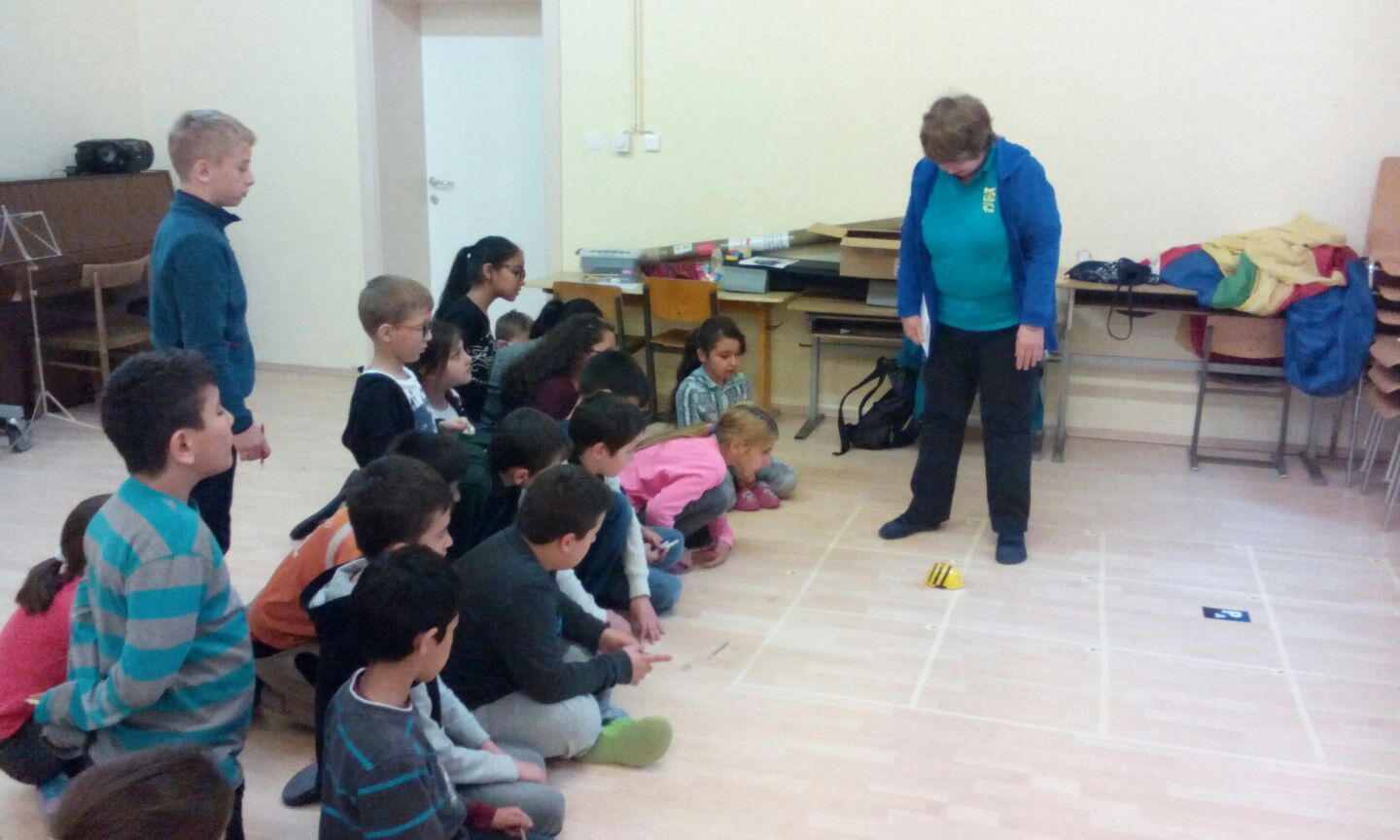
  • BeeBots, 
  • Lego Robots, 
  • First Lego League (FLL) Cargo Challenge.  

This time the example build was to stop at the edge of the table using various sensors. Distance sensor is most obvious, but change in light with a light sensor also worked. But construction also mattered: how far ahead of the robot did the sensor need to be to stop in time? How fast or slow could robot go and still stop? Needed more of a challenge: The FLL Lego challenge table was there to try.  

9 year old's Original Winter World
Overview
Winter World location circled in blue


FLL Simple? Challenge: Launch the plane

Sunday, September 5, 2021

Robots in a tent

In Lower Austria there is children's festival each year in Herzogenburg. COVID checks were required to enter, so masks required.   Robotix4Me has booth each year, which is a tent. A walking Lego robot nicknamed Robbie, is demo'd at the tent entrance. Here ~15 Lego Mindstorms kits are set out for kids to try to build, modify, and program a robot to move and sense something. The tables are usually full of children. Younger ones get to try out BeeBots or new Lego Spike with Scratch or Icon language (similar to Scratch Jr). Photos were taken during lunchtime when we had less of a crowd.

Personally I was amazed how good a robot the children could create in such a short time. A 6 year old did the best programming of those I helped. She used an existing Lego Spark robot using a version of Scratch to try out different ways to control motors moving wheels and a "fan" by reacting to various sensors. 

Brothers working together

Robots are more interesting than lunch

Saturday, April 20, 2019

FIRST, the big robots

 I volunteered to help at the FIRST Championships in 2019 and was assigned to the high school age FIRST large robots. The variety and how simple robots from poorer countries kept up with the fancy all wires in row via clips richer countries.  Strategy was to do as much of challenges as possible and in necessary hinder your opponent for doing challenges.   Better teams had roles assigned, but rotated some so all got to be active on the field during some challenge. Two teams competed against two other teams. Here is a video of part of a match.


Tuesday, July 24, 2018

Robotix4Me in Lower Austria

After reconnecting with a St.Pölten teacher at Modelbau in March 2017 I started helping and learning with Robotix4Me (many photos) in area of Lower Austria I live in. 

Brief Overview:

Robotix4Me offers
  1. Begin with BeeBots, fun problem solving 
  2. In middle programming robots to feel and move 
  3. Every day use Industry 4.0 IOT=Internet Of Things 
    • via traffic light with various hardware

  • My Poster presentation at First Lego League contest
  • Helping with BeeBots in schools,
  • Helping with and learning about First Lego League 
    • One of coaches for Lillenfeld 
  • Raspberry Pi Intro lessons
  • Lego EV3 programming training 
  • Encouraging use of Raspberry Pi. 
  • Modelbau in St.Pölten in 2018
  • Where connected in2017
  • Learned about other robots like Thymio
  • Visited RoboCup Junior 
    • Current project: Use of EV3DEV for soccer ball completion.
  • Attended RedNode overview

See Robotix4Me website for pictures. Images may be posted here later.

.[Note: My hair varies alot in photos, but praise the Lord I am cancer free. ]


Monday, April 24, 2017

Wann kommst du wieder?= When will you come again?

BeeBot in Daniel Gran II Schule April 5


  • 21 3rd graders
  • 3 stations (6 or 8 groups)
    •  Play robot one child programmed the other
    • BeeBot math 
      •  add 2 numbers like 3+5
        • 3 forward, pause, 5 forward, pause (on 8)
      • 2 digit numbers like 25
        • go to 2, pause, got to 5
    • BeeBot in traffic
  • end  class challenge
    • show path to number
    • showBeeBot buttons pressed to number
    • best 4 received a chocolate Easter lamb